
Unreasonable Hospitality: Operations for Business Success
Unreasonable Hospitality: How Operations Teams Drive Extraordinary Business Success
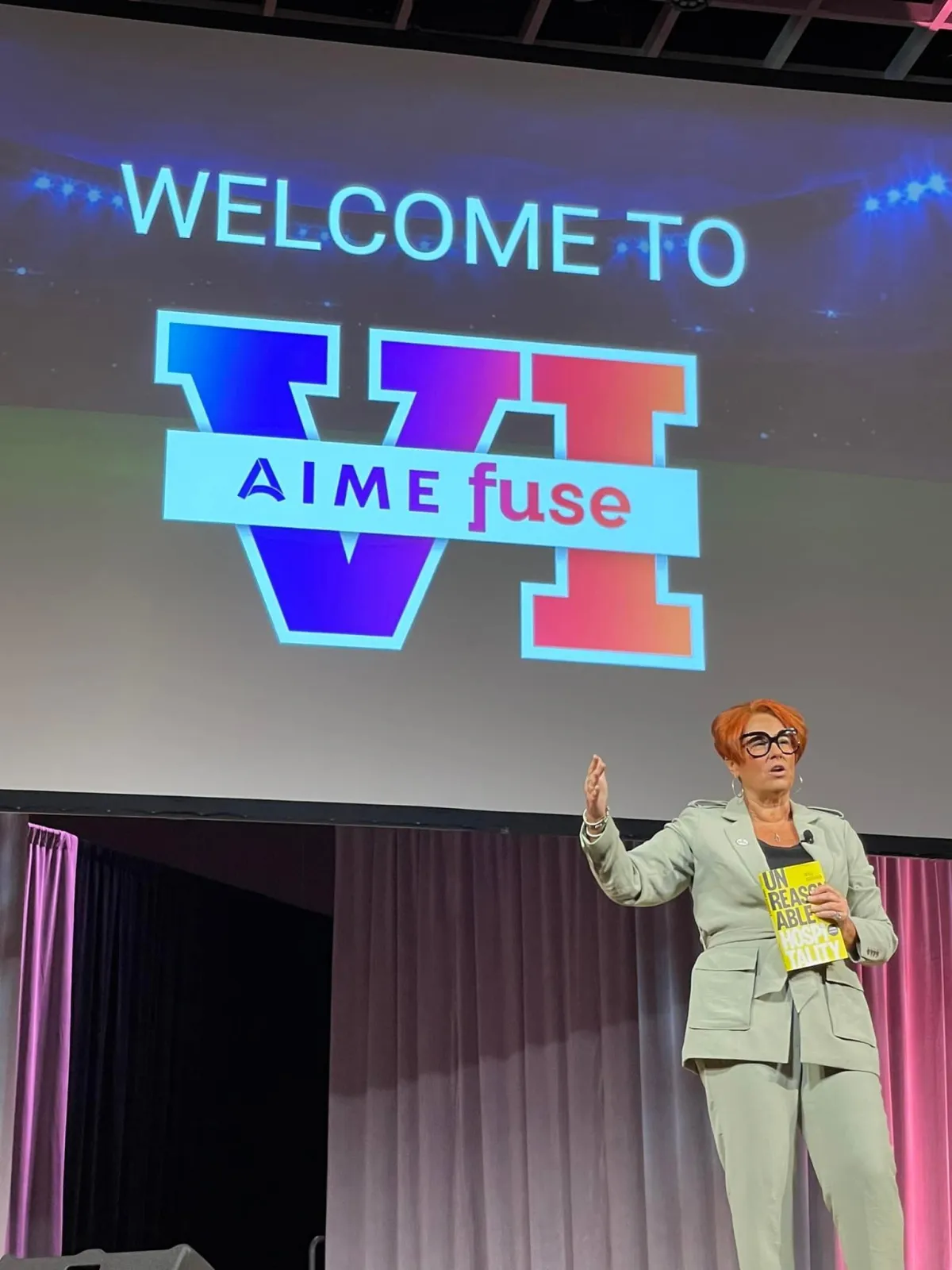
When I stepped onto the stage last Friday, I wasn't just delivering another speech—I was sharing a philosophy that has transformed countless businesses I've coached: unreasonable hospitality within operations teams. This concept isn't just a nice-to-have; it's the secret ingredient that creates extraordinary customer experiences and drives sustainable business growth.
As someone who rebuilt a mortgage company from the ground up after the 2009 crash, I've learned firsthand that exceptional service isn't about doing what's expected—it's about going beyond what's reasonable. Today, I'm breaking down how you can implement this philosophy in your organization, whether you're leading a small team or managing hundreds of employees.
What is "Unreasonable Hospitality" and Why Does It Matter?
Unreasonable hospitality isn't about being irrational—it's about deliberate overdelivery. It's the difference between meeting expectations and creating memorable experiences that turn clients into advocates.
"We don't just do mortgages—we build legacies. And legacies aren't built on merely satisfactory service."
When implemented within your operations team, unreasonable hospitality becomes the backbone that enables your entire organization to excel. Here's why it matters:
It creates referral engines - Clients who experience exceptional service become your most effective marketing channel
It reduces price sensitivity - When service is extraordinary, clients focus less on rates and more on value
It builds resilient businesses - Companies known for exceptional service weather market downturns better
It attracts top talent - The best professionals want to work where excellence is the standard
Creating a Customer-Centric Operations Framework
1. Prioritize Customer-Centricity in Every Decision
Unreasonable hospitality begins with placing the customer at the center of every operational decision. This isn't just a platitude—it requires systematic implementation.
In my coaching work with mortgage companies and real estate teams, I've found that truly customer-centric operations follow these principles:
Evaluate decisions through the customer lens - Before implementing any new process, ask: "How does this improve the customer experience?"
Collect and act on feedback obsessively - Create multiple feedback channels and establish protocols for rapid response
Empower front-line teams to solve problems - Give staff the authority to make decisions that benefit the customer without endless approvals
Design backwards from ideal experience - Start with the perfect customer journey and build systems to support it
One mortgage broker I coached implemented a "no transfer" policy—meaning once a client was assigned to a processor, that person handled everything through closing. While this created operational challenges, it increased customer satisfaction scores by 47% and referrals by 32%.
2. Empower Your Sales Team Through Operational Excellence
The relationship between operations and sales isn't just important—it's essential. When operations teams embrace unreasonable hospitality, they transform from "backend support" to "sales enablers."
Key strategies for sales-operations alignment:
Create transparent processes with clear visibility - Both teams should see exactly where each client stands in the pipeline
Establish joint KPIs and shared incentives - When both teams win together, collaboration improves
Implement regular cross-functional meetings - Weekly huddles between sales and operations prevent issues and build relationships
Develop rapid response protocols - Create systems for urgent requests that respect both teams' workflows
Celebrate joint wins - Recognize when collaboration leads to exceptional client outcomes
A real estate brokerage I worked with implemented a "processor pairing" program where each agent was matched with a dedicated operations specialist. This reduced closing delays by 28% and increased agent productivity by 35%.
"Success isn't random. It's built on systems that enable your people to deliver exceptional experiences every single time."
3. Continuous Improvement: The Engine of Unreasonable Hospitality
Unreasonable hospitality isn't a destination—it's an ongoing journey of refinement and elevation. Companies that excel at this create formal systems for continuous improvement.
Implementation strategies:
Establish a clear Service Level Agreement (SLA) - Document exactly what exceptional service looks like in measurable terms
Review and update your SLA quarterly - Market expectations evolve, and your standards should too
Create innovation incubators - Dedicate time for teams to develop and test service improvements
Study cross-industry excellence - Look beyond competitors to find inspiration from unrelated sectors
Measure the right metrics - Focus on indicators that reflect the client experience, not just operational efficiency
Remember: continuous improvement isn't about fixing what's broken—it's about enhancing what already works.
One loan officer I coached implemented a "surprise and delight" program where their operations team identified one opportunity per client to go beyond expectations. This simple practice increased their referral rate by 41% within six months.
The Business Case for Unreasonable Hospitality
Some leaders hesitate to implement unreasonable hospitality because they worry about operational efficiency or scalability. Let me address these concerns directly:
Unreasonable hospitality is not:
Throwing resources at problems without strategy
Saying yes to unreasonable client demands
Overworking your team
Unreasonable hospitality is:
Strategic overdelivery in areas that matter most
Creating systems that make exceptional service repeatable
Investing in moments that create emotional connections
The return on investment is clear. Businesses that embrace this philosophy consistently outperform competitors on:
Client retention (typically 23-38% higher)
Referral generation (2-3x industry averages)
Profit margins (15-22% improvement over 24 months)
Team retention (turnover reduced by 34% on average)
As I often tell my coaching clients at www.corrinacarter.com: "Exceptional service isn't an expense—it's your most profitable investment."
Essential Resources for Implementing Unreasonable Hospitality
To deepen your understanding and implementation of these principles, I recommend these three transformative books:
1. "Unreasonable Hospitality" by Will Guidara
Will Guidara transformed Eleven Madison Park into one of the world's best restaurants by implementing what he calls "unreasonable hospitality." His book provides actionable frameworks for:
Identifying opportunities for meaningful moments
Creating systems that enable consistent excellence
Building a culture where hospitality becomes instinctive
Key takeaway: Excellence happens at the intersection of technical perfection and genuine human connection.
2. "Management Mess to Leadership Success" by Scott Miller
Scott Miller candidly shares his leadership journey, offering practical wisdom for:
Navigating the complexities of leading service teams
Maintaining customer focus while handling internal challenges
Creating accountability without micromanagement
Key takeaway: Great leadership isn't about perfection—it's about continuous growth and empowering others.
3. "Traction" by Gino Wickman
This practical framework for business growth ensures that operations and sales work cohesively by:
Implementing the Entrepreneurial Operating System (EOS)
Creating alignment through shared vision and clear metrics
Establishing rhythms that keep teams connected and focused
Key takeaway: Systematic approaches create the foundation for exceptional service delivery at scale.
In my leadership development programs at www.corrinacarter.com/leadership-development, we use these resources as foundational texts for building service-oriented leadership capabilities.
Implementing Unreasonable Hospitality in Organizations of All Sizes
The beauty of unreasonable hospitality is that it scales—with the right approach. Here's how implementation differs across organization sizes:
For Small Teams (1-10 people):
Advantage: Agility and personal connection
Focus areas: Creating consistent systems, documentation, and client touchpoints
Implementation strategy: Weekly team huddles focused on service enhancement
For Growing Businesses (11-50 people):
Advantage: Developing specialized roles while maintaining cohesion
Focus areas: Clear handoffs, communication protocols, and feedback loops
Implementation strategy: Dedicated operations leader focused on service excellence
For Larger Organizations (50+ people):
Advantage: Resources for formalized programs and specialized roles
Focus areas: Maintaining cultural consistency, preventing silos, and scaling excellence
Implementation strategy: Cross-functional service excellence teams and formal continuous improvement systems
How My Coaching Programs Support Unreasonable Hospitality Implementation
Through my work with mortgage professionals, real estate teams, and business leaders, I've developed specialized coaching programs that help organizations implement these principles effectively:
Systems Development & Team Building: Creating operational frameworks that support unreasonable hospitality (see my comprehensive approach at www.corrinacarter.com/systems-development)
Leadership Development: Building leaders who champion service excellence and empower their teams to deliver it (discover the program at www.corrinacarter.com/leadership-development)
Customer Experience Mapping: Designing touchpoints that create memorable client experiences at every stage (schedule a discovery call at www.corrinacarter.com/discovery-call to learn more)
Bringing Unreasonable Hospitality to Your Organization: Next Steps
Ready to transform your operations team into a catalyst for extraordinary client experiences? Here's how to begin:
Assess your current service standards - What does your SLA actually promise? How consistently do you deliver it?
Map your client journey - Identify every touchpoint from first contact through ongoing relationship
Find three opportunities for unreasonable hospitality - Where could you meaningfully exceed expectations?
Create an implementation plan - Determine systems, training, and resources needed
Establish metrics to track impact - Define how you'll measure success beyond satisfaction scores
Remember, unreasonable hospitality isn't about grandiose gestures—it's about consistently exceeding expectations in ways that matter to your clients.
The Extraordinary Impact of Ordinary Moments
The most powerful examples of unreasonable hospitality often come from seemingly small moments. One mortgage processor I coached noticed a first-time homebuyer mentioned being nervous about painting their new home. The processor created a simple custom guide to interior painting and included a $50 gift card to a local hardware store with their closing documents.
That small gesture—perhaps 30 minutes of effort and minimal cost—resulted in three referrals within 60 days.
This is the essence of unreasonable hospitality: not extravagance, but thoughtfulness applied systematically.
Conclusion: The Competitive Advantage of Caring More
In today's business environment, where technology can commoditize many aspects of service, unreasonable hospitality creates the differentiation that builds sustainable success. By implementing these principles within your operations team, you create the foundation for extraordinary client experiences, empowered sales teams, and a thriving organization.
As I tell the leaders I coach: "In a world where everyone can offer similar products, the decisive advantage goes to those who care more—and show it through systems that deliver consistency."
If you're ready to transform your operations team into the catalyst for extraordinary growth, I invite you to schedule a discovery call at www.corrinacarter.com/discovery-call. Together, we'll explore how unreasonable hospitality can become your competitive advantage.
SEO What is unreasonable hospitality in business operations?
Unreasonable hospitality in business operations means systematically exceeding client expectations through deliberate service design, empowered teams, and continuous improvement. Unlike typical customer service, it creates memorable experiences that drive referrals, increase retention, and build business resilience through both good and challenging market conditions.
How do operations teams impact sales performance in mortgage and real estate?
Operations teams directly impact sales performance by enabling faster closings, reducing errors, improving communication, and creating exceptional client experiences that generate referrals. When operations embraces unreasonable hospitality, sales professionals can focus on relationship-building rather than problem-solving, typically increasing production by 25-40% according to industry data.
What metrics should businesses track to measure operational excellence?
Businesses should track both efficiency metrics (cycle time, error rates, cost per transaction) and experience metrics (Net Promoter Score, referral rates, testimonial quality, repeat business) to measure operational excellence. The most effective organizations also track "moments of truth" metrics that measure performance at critical client touchpoints during the customer journey.
How can small businesses implement unreasonable hospitality with limited resources?
Small businesses can implement unreasonable hospitality by focusing on high-impact touchpoints, creating simple but effective systems, empowering every team member to solve problems, collecting and acting on client feedback, and studying best practices across industries. With limited resources, consistency and personal connection become even more important than elaborate programs.
What leadership skills are necessary to create a culture of exceptional service?
Leaders must develop clear vision-setting, effective communication, empowerment strategies, accountability systems, recognition programs, and continuous improvement mindsets to create a culture of exceptional service. The most successful service leaders also demonstrate vulnerability, curiosity, and a willingness to participate directly in service delivery regardless of their position.
